LORE
Envisioning a Venture Creative Studio
How can a creative studio work as a venture partner rather than a service provider, without losing discipline, clarity, or authorship?
That question sat at the center of LORE from the beginning. A lot of studios talk about partnership, but their business model is still built around transactions. The relationship is defined by deliverables, and pricing usually sets the limit of how involved they can really be.
LORE started as a response to that limitation. It was an attempt to imagine a studio model built less around service output and more around shared conviction, long-term thinking, and structural alignment.
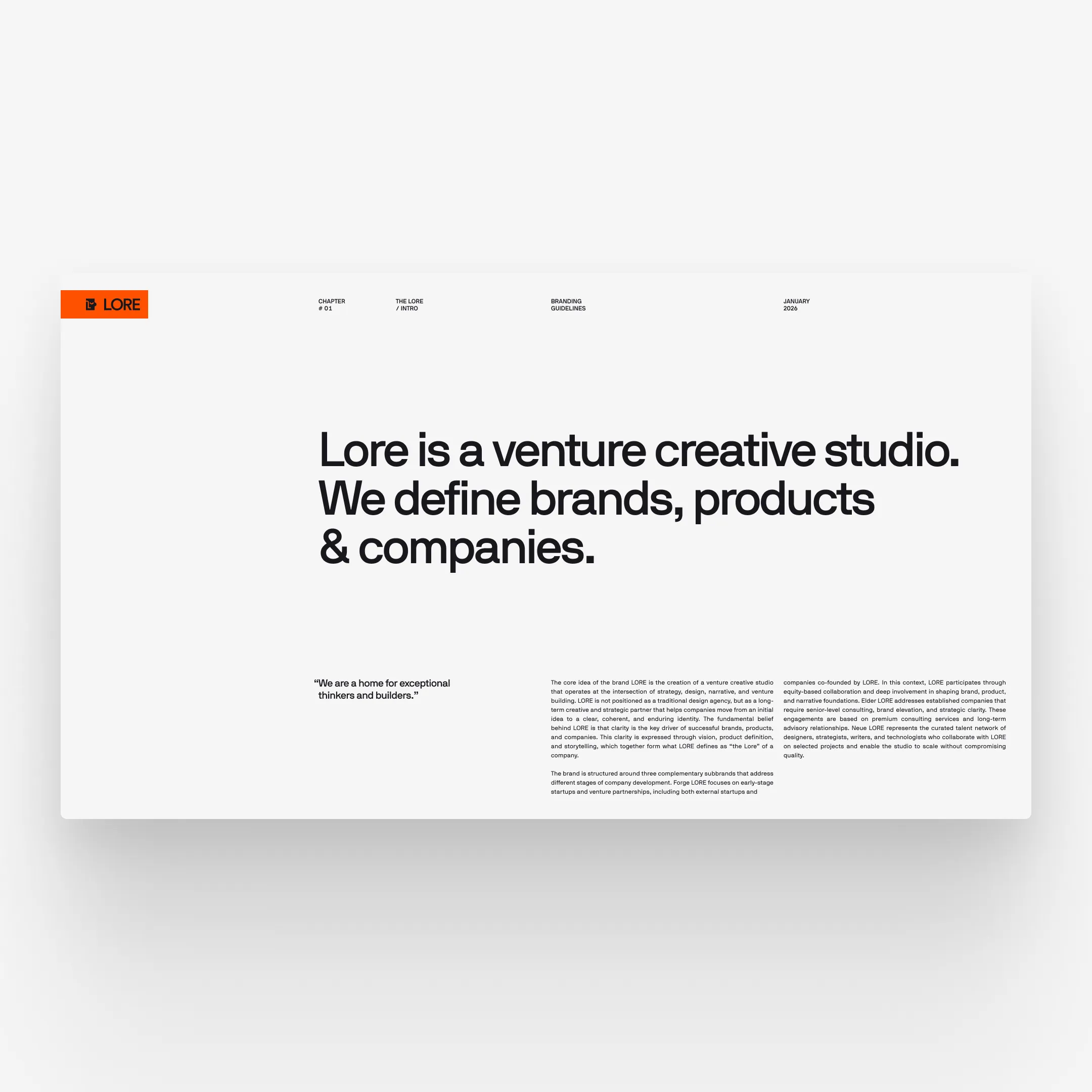
LORE was conceived differently from a typical studio. Not as an extension of one person’s freelance practice, but as a standalone venture designed to formalise shared authorship. It was initiated by a collective of designers, with the idea of building from a small and disciplined core.
The ambition was never to grow through volume. It was to grow through structure. From the start, LORE was framed more as a venture architecture than a service offer. For now, it exists as a strategic concept, but one grounded in clarity and long-term coherence rather than loose ambition.
What made the project interesting was that it was not just about designing an identity. It was about designing the logic of a studio before it fully existed.
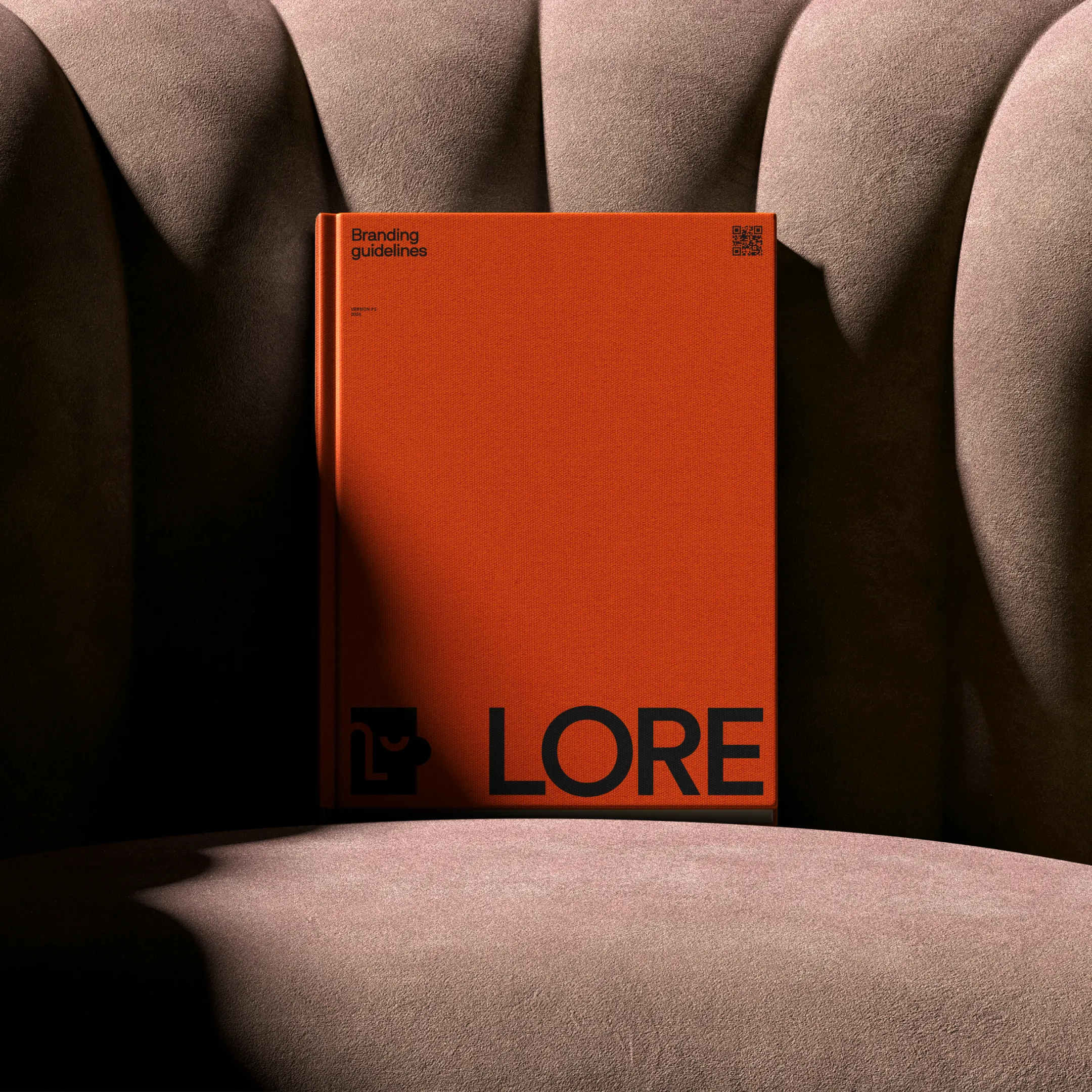
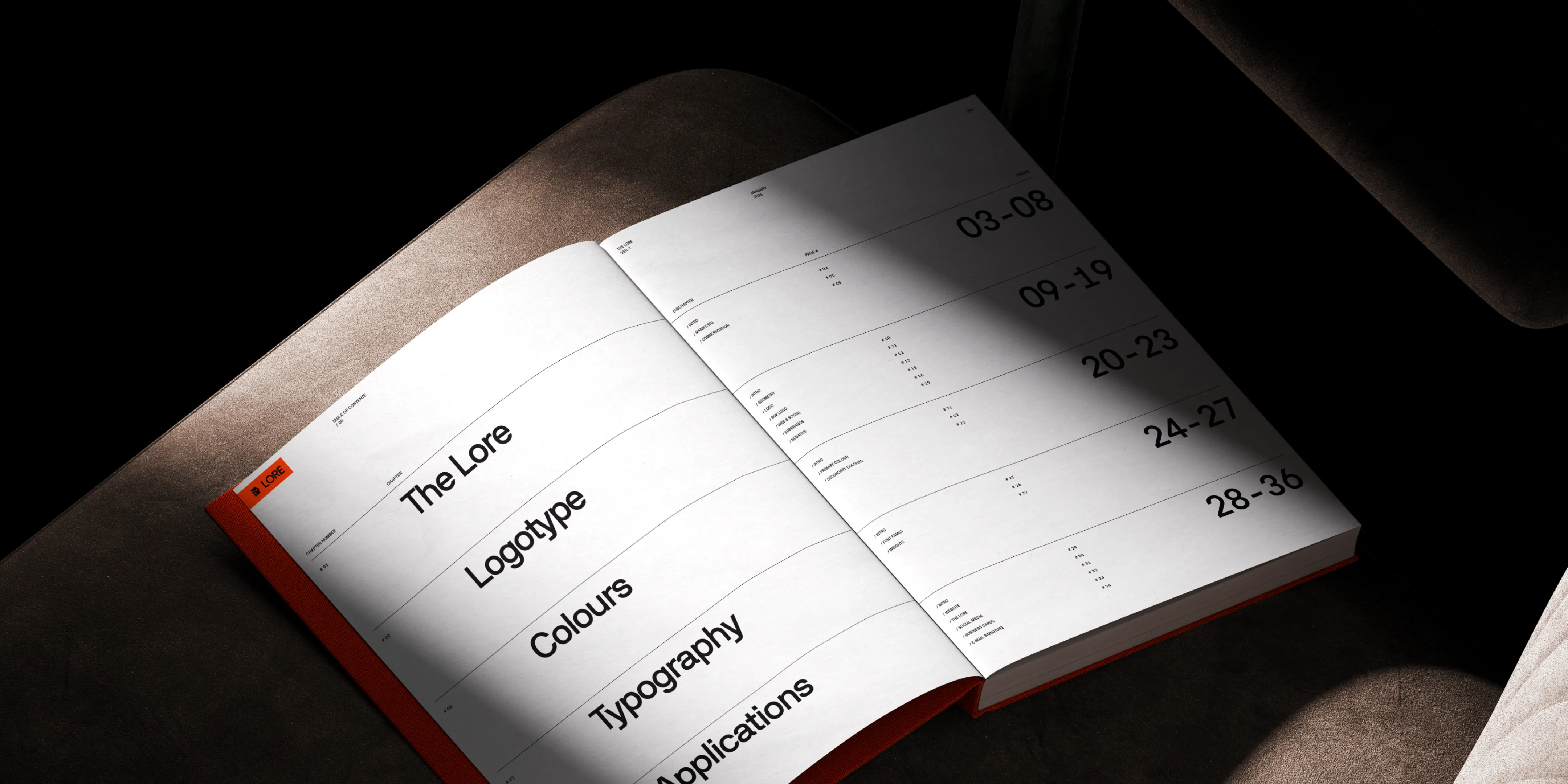
The first decision was positional. LORE does not define itself as a design agency. It positions itself as a venture creative studio working at the intersection of strategy, narrative, product, and company building. That distinction was important to me because it changes the structure of the relationship, not just the wording around it.
The second decision was to formalise the model into three complementary expressions: Forge LORE, Elder LORE, and Neue LORE. Early-stage ventures need equity-based collaboration and close co-creation. More established organisations need senior-level clarity and strategic depth. Scale, in this model, comes through a curated talent structure rather than through conventional hierarchy.
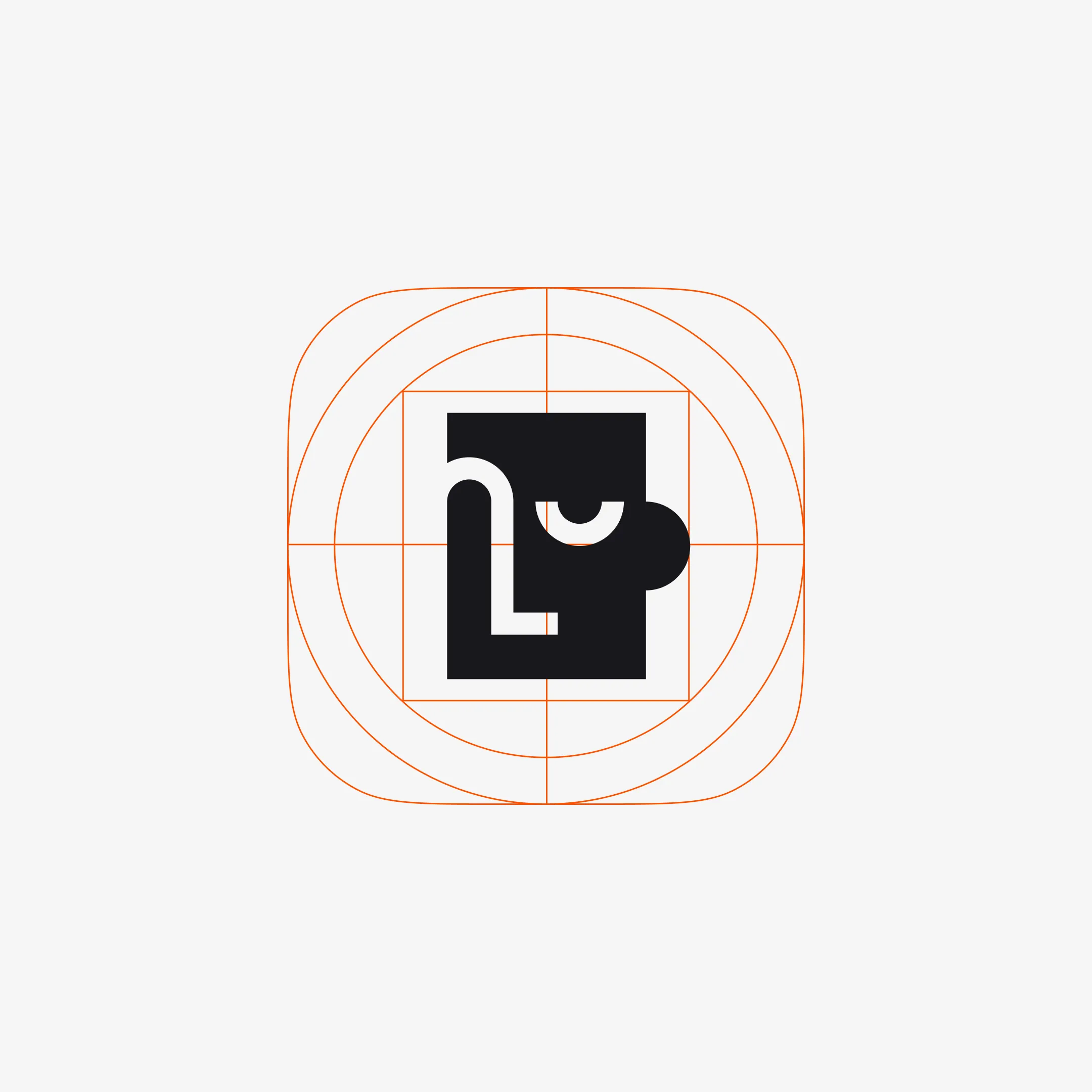
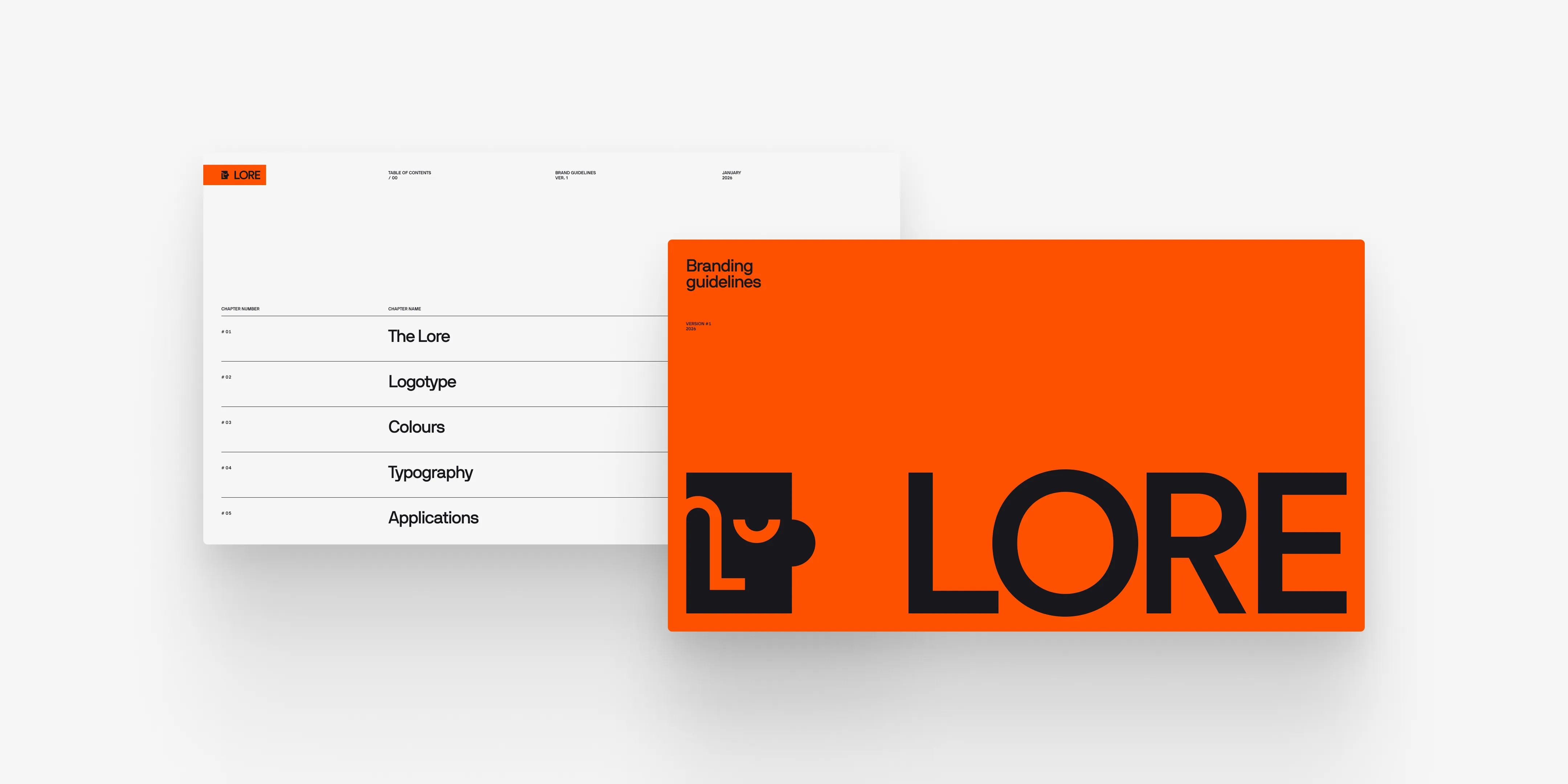
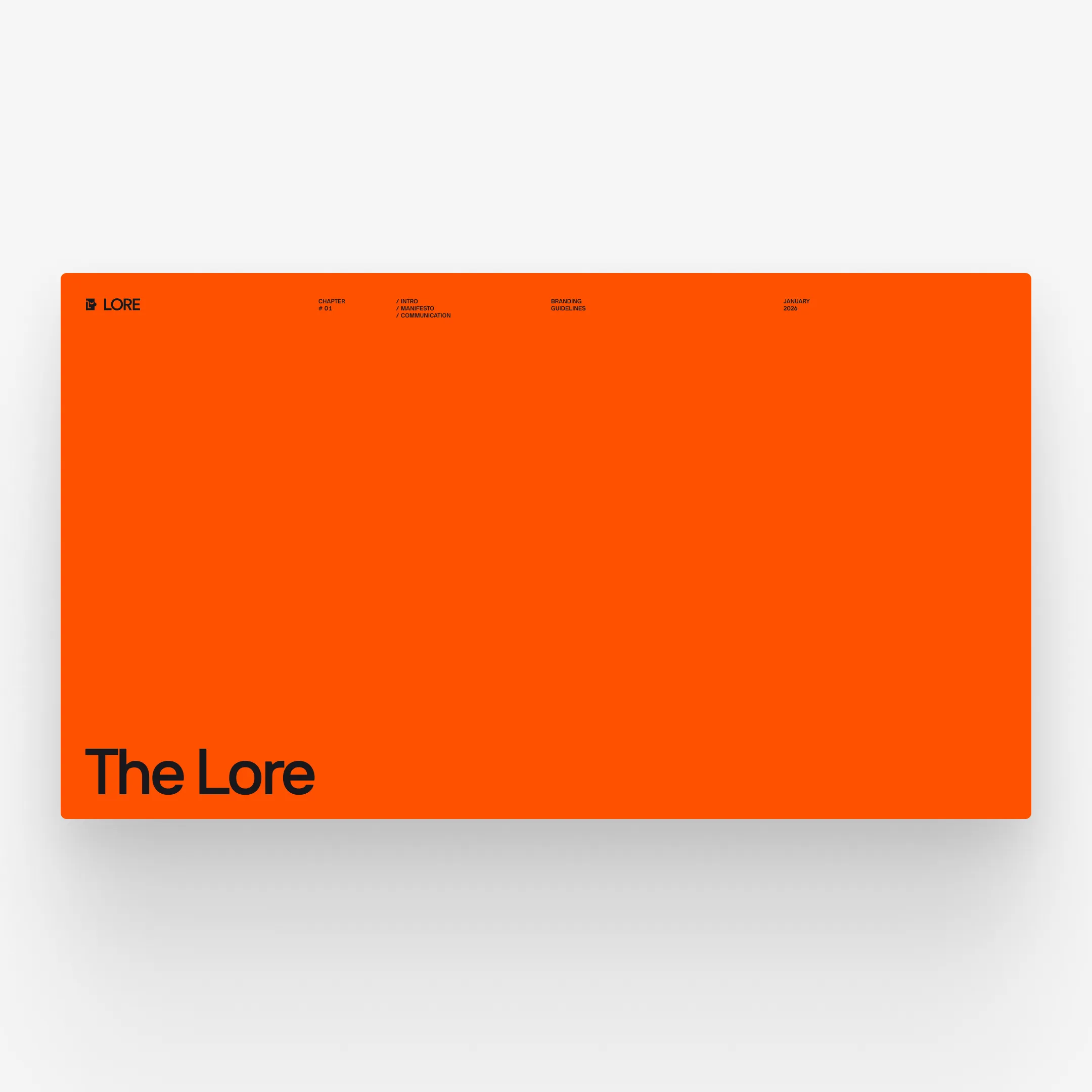
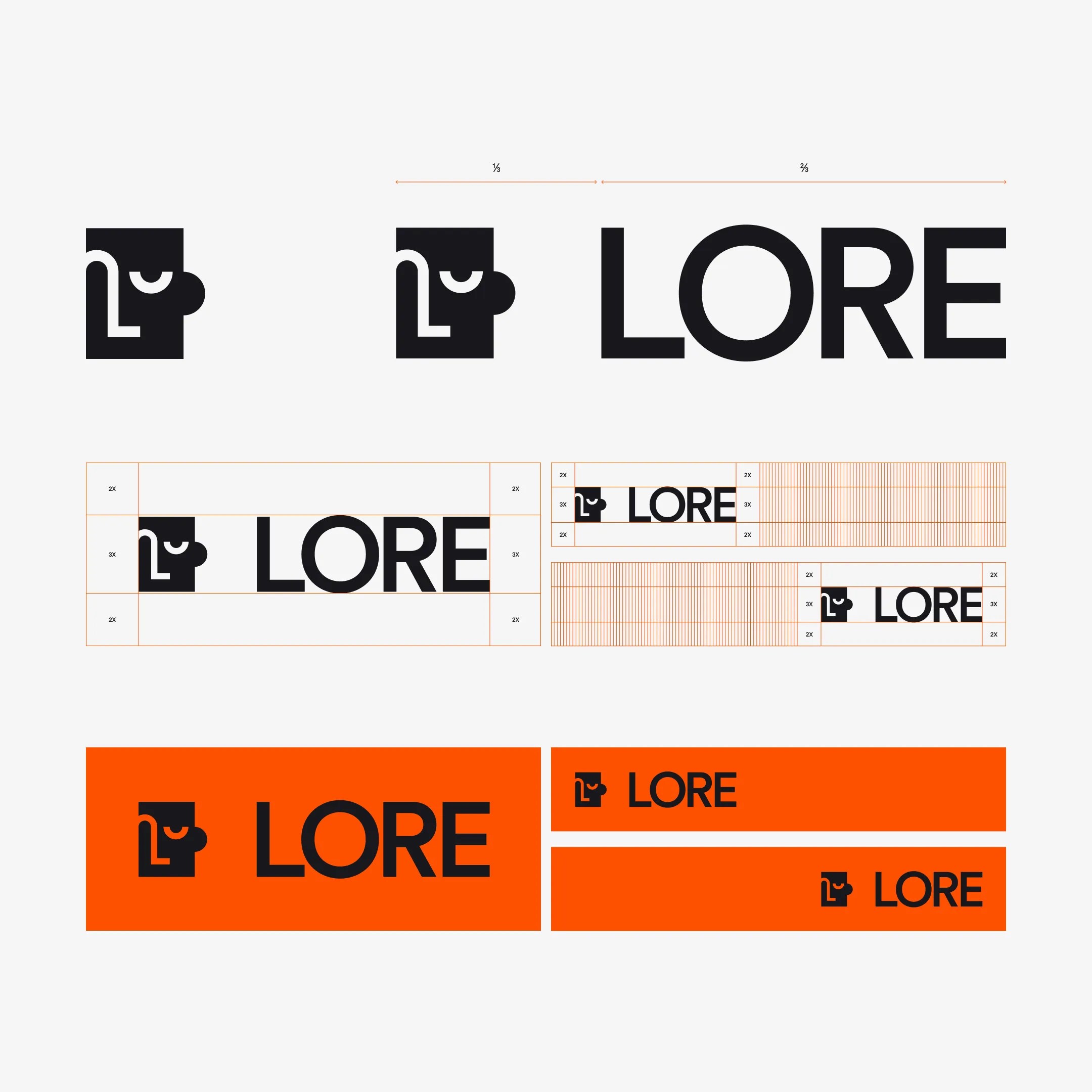
The third decision was restraint. The logotype is built on a strict grid. Typography is reduced to a single family. Colour is anchored in one primary signal with disciplined neutrals around it. Those constraints were not there to make the brand feel minimal for its own sake. They were there to reflect how the studio intends to think: with precision, structure, and intention.
The economic model follows the same logic. Equity participation signals belief. Premium advisory signals seriousness. In that sense, the business model and the intellectual model are meant to reinforce one another.
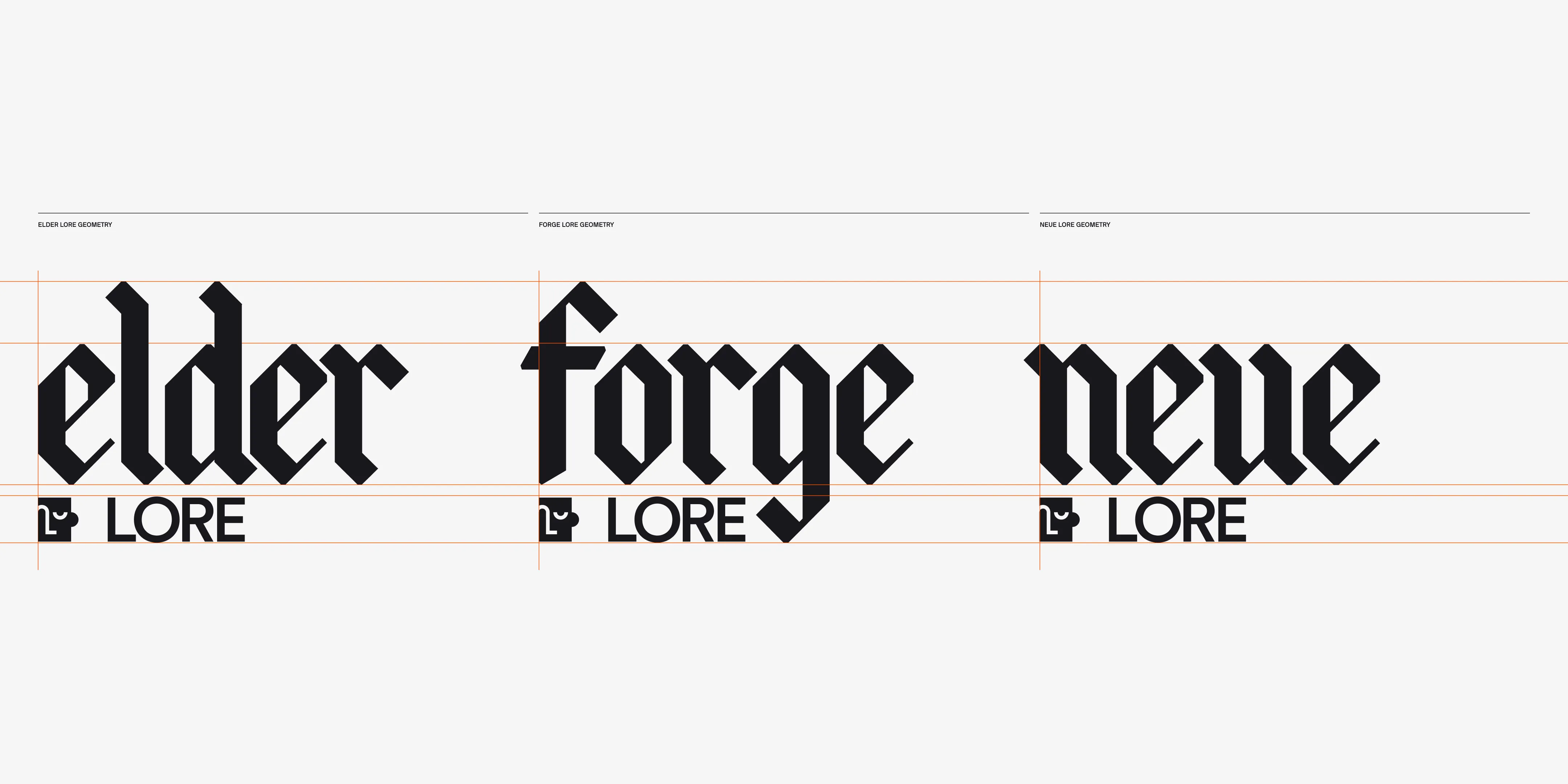
Because LORE is still conceptual, the testing happened through structural stress-testing rather than launch conditions.
The three-part architecture was pushed across different hypothetical scenarios: early-stage founders, established leadership teams, and independent collaborators. In each case, the question was whether the system stayed coherent under pressure. If the positioning started to bend too easily, it was refined.
The manifesto was edited down to remove excess and sharpen intent. The sub-brand structure was examined to avoid unnecessary hierarchy, both visually and structurally. The visual constraints were also tightened so the system would feel durable rather than expressive in a short-term way. If it could not survive internal scrutiny, it would not hold up in the real world either.
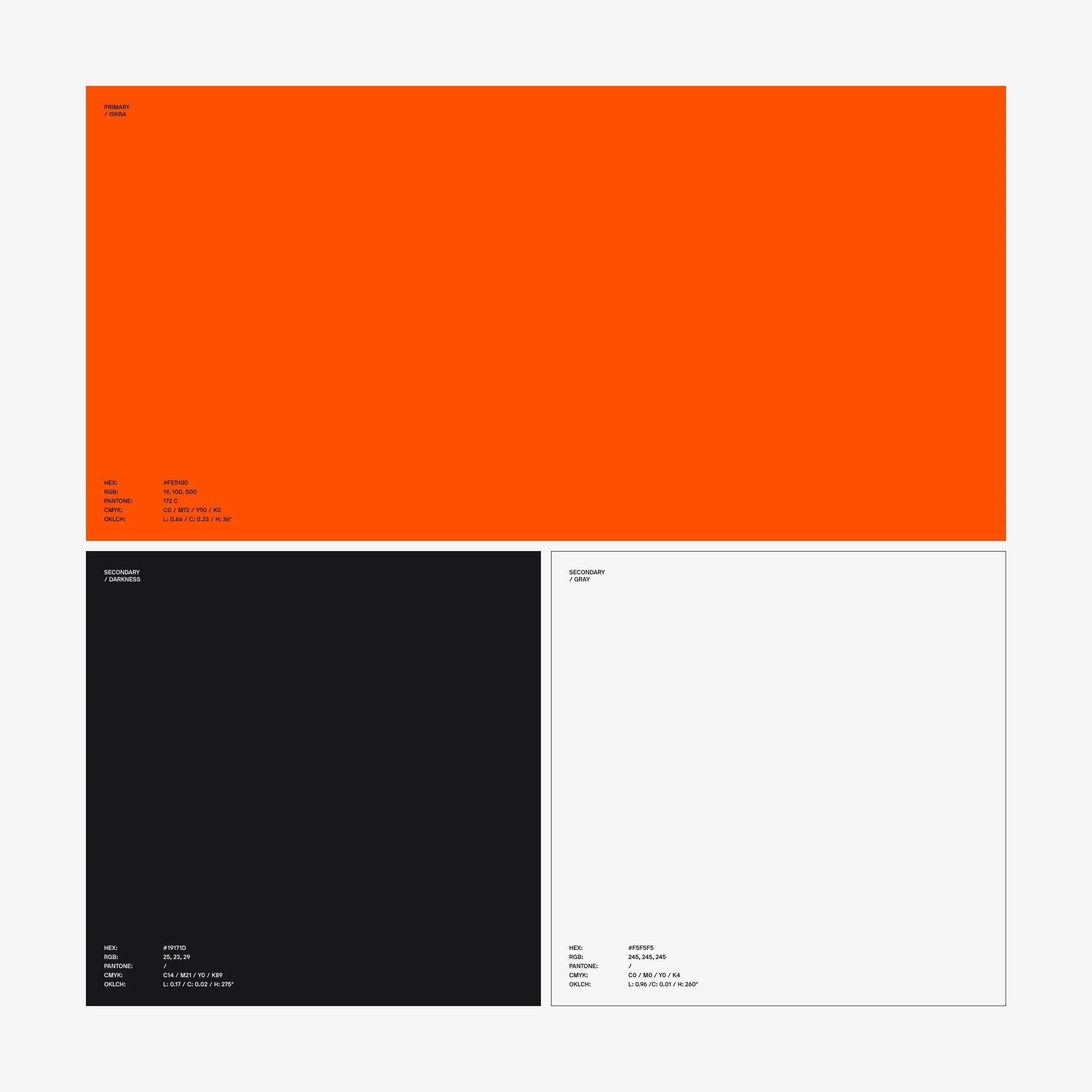
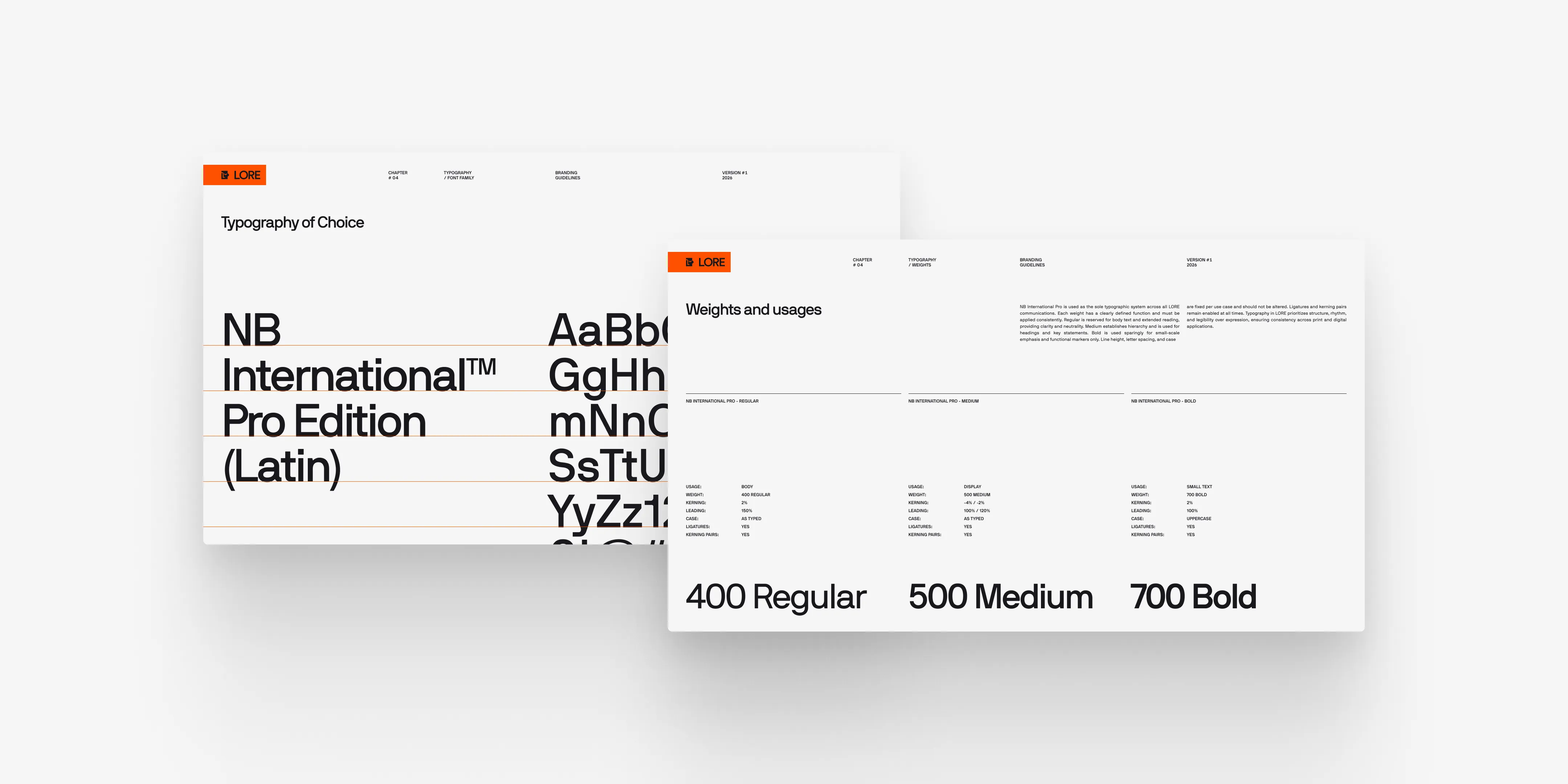
LORE established a coherent venture framework built around clarity as its main asset. It gave form to a studio model where authorship, structure, and economic alignment support each other rather than pull in different directions.
What exists today is not a launched operation, but a defined standard. A system designed to evolve without losing itself. A structure meant to hold multiple collaborators while keeping a clear intellectual core.
For now, LORE remains a blueprint. The next phase will decide whether that conviction can become a real venture.